
Gender representation & outcomes for women (grow) report:
What South Carolina’s male-dominated legislature tells us about representation, and the consequences for women’s health, safety, and economic security.
presented by Her Bold Move Research Center, 2026
By Barney Riley
Data Visualizations by Her Bold Move Research Center Staff: Willow Maisel and Kayla Tjenalooi
In 2023, the five women then serving in the 46-member South Carolina Senate formed a bipartisan coalition to filibuster the proposed near-total abortion ban. Known as the “Sister Senators,” they took turns speaking on the Senate floor for two days, describing the importance of reproductive healthcare and the dangers of invasive privacy laws.
Grounding a divisive political issue in the deeply personal realities of pregnancy and reproductive health, they made the human consequences of a near-total abortion ban hard to ignore. As the only women in the chamber, they stood up to emphasize what happens to women’s lives when lawmakers make decisions about their bodies without them in the room. And they succeeded. Together, the Sister Senators prevented the near-total ban from passing and fought to amend the six-week “Heartbeat Bill” that ultimately passed.
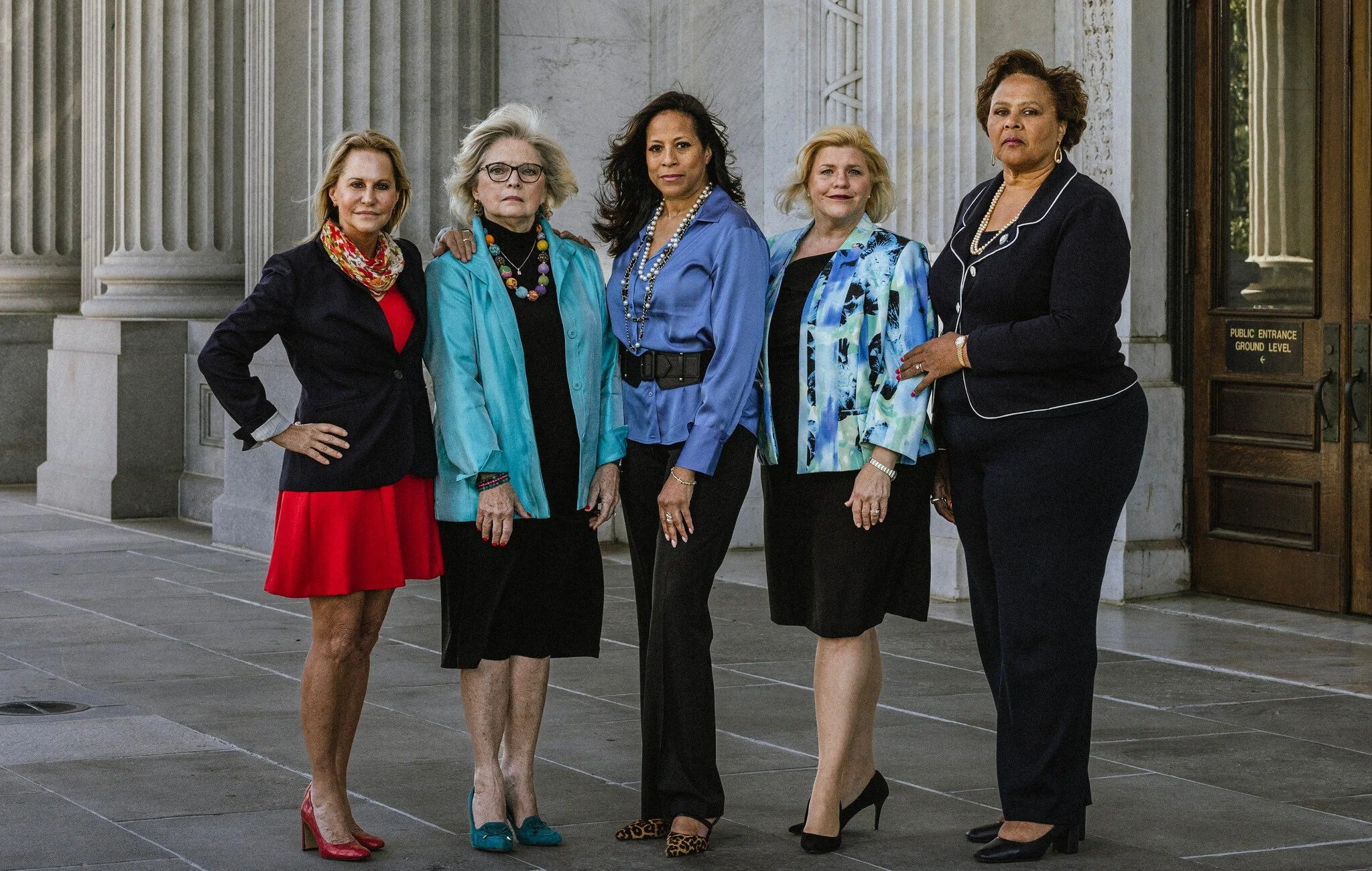
From left, South Carolina State Senators Sandy Senn, Katrina Shealy, Mia McLeod, Penry Gustafson and Margie Bright Matthews. Audra Melton for the New York Times.
A year later, the three Republican women who were part of that coalition were unseated in their primaries by male, staunchly “anti-choice,” opponents.
Throughout the elections, their opponents had launched attack ads casting them as the “sisters for death,” and displayed former Senator Katrina Shealy, the longest-serving female state senator in South Carolina history, and the chamber’s only chairwoman, as a “baby killer” on public billboards. She and former Senator Penry Gustafson lost their primaries by landslides, while former Senator Sandy Senn lost by a mere 33 votes.
Now South Carolina’s Republican Senate Caucus has no women left – a lesson about the fragility of women’s representation and the potential political costs of righteous dissent.
The fact that this particular issue is what formed a coalition across party lines but not across gender lines is striking. The Her Bold Move team was curious to learn how women’s representation and participation impacts lawmaking, particularly for women-related issues.
In 2025, Her Bold Move launched a Research Center and immediately got to work studying women-related bills that passed at the state level across all 50 states over 20 years. They then tracked how many women were in each state legislature at the time these bills were passed.
The team conducted a deep dive into South Carolina’s legislation passed over the past two decades related to women’s health, safety, economic security, and civic/legal advocacy. The gender divide was striking. While women made up a greater share of sponsors of legislation expanding women’s rights, men overwhelmingly dominated sponsorship of restrictive legislation pertaining to women.
Making Decisions for Women, without Women
From 2003 through 2012, South Carolina ranked last nationwide in female representation in its state legislature and currently sits at second-to-last behind West Virginia. Over time, as seen in Table 1, the percentage of women in the legislature has generally increased, reaching about 17% in 2021. But this short-lived peak dropped in 2023 to about 14%.
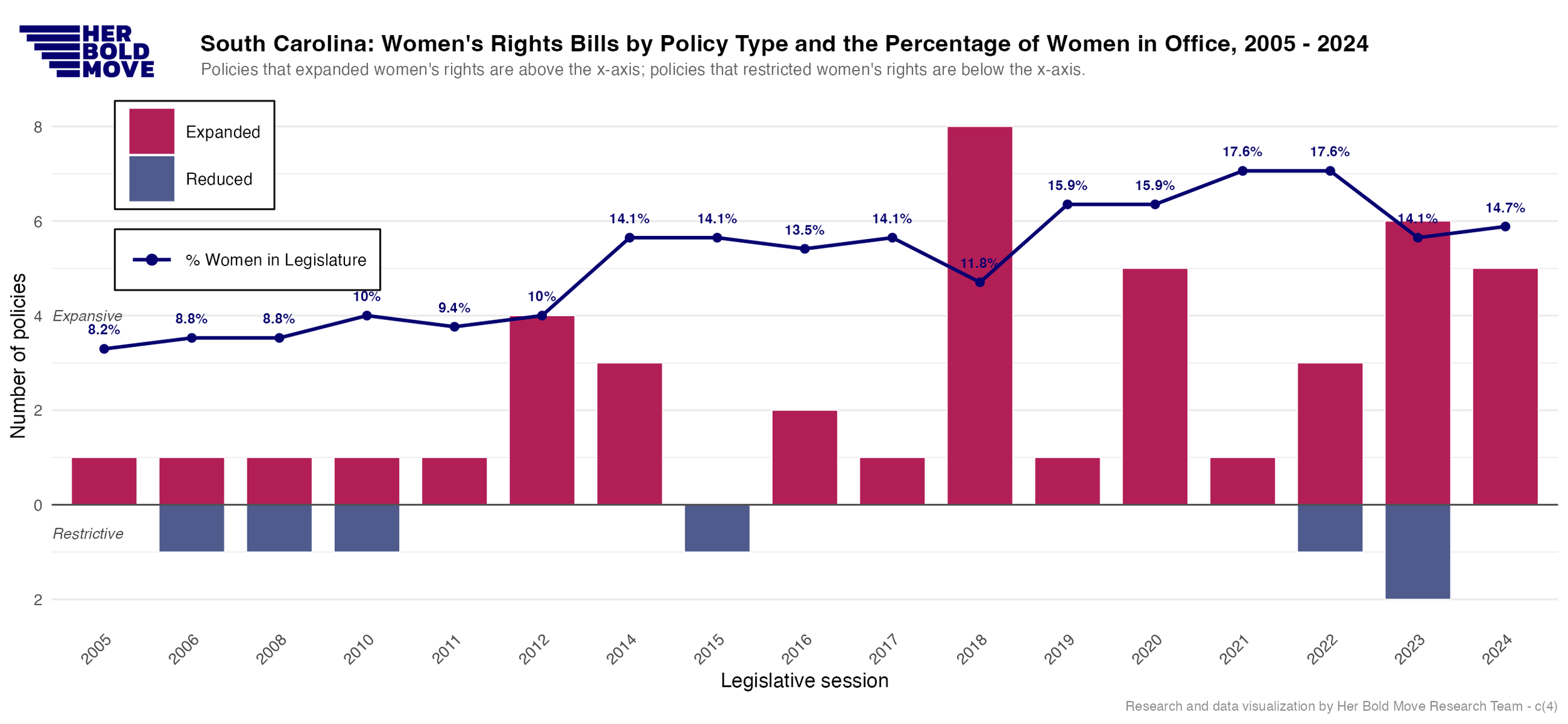
Table 1: South Carolina women’s rights bills by policy type and the percentage of women in office, 2005–2024.
The remarkably low rate of women in South Carolina’s legislature creates a dangerous dynamic in which there are not enough women’s voices to counter policies that restrict women’s rights. Our research illustrates how bills that would restrict women’s reproductive healthcare, particularly abortion access, is consistently sponsored by a substantial majority of male legislators. As seen in Table 2, among South Carolina’s policies passed in the last two decades, Republican men made up the highest number of sponsors for restrictive abortion policy, at 110 sponsors, followed by Republican women at 13.
Years before Roe v. Wade was overturned, lawmakers in South Carolina enacted restrictions that imposed additional requirements on abortion access, including long waiting periods and mandatory ultrasound procedures. These earlier policies, drafted overwhelmingly by men, helped build the legal framework upon which today’s 6-week gestational ban was developed.
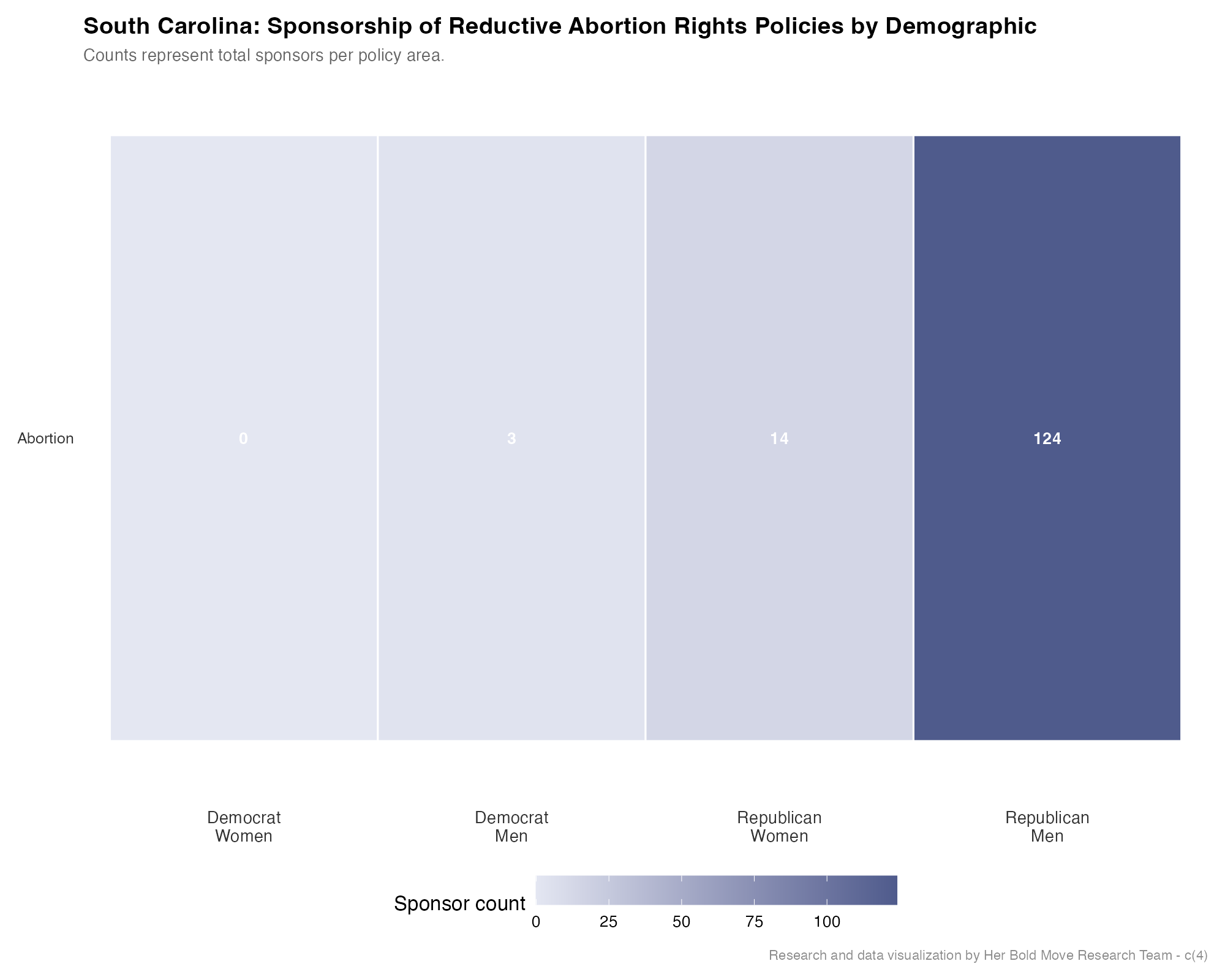
Table 2: Sponsorship of reductive abortion rights policies in South Carolina by demographic.
The disparity in sponsorship for these bills matters because a sponsor is more than a name attached to a bill. Sponsors are the lawmakers who introduce legislation, build support for it, defend it publicly, and work to move it through the legislative process before bringing it to the governor’s desk. And when women are largely absent from that process, the policies affecting women’s lives are shaped overwhelmingly without their input.
The Gender Gap Behind Women’s Policies
Our research indicates a correlation between women’s representation in rooms where women’s health policy is drafted, and legislative outcomes becoming more favorable to women. Our research reveals a clear relationship between women’s participation in the legislative process and bills passed that expand women’s health, safety, and economic security. As seen in Table 3, among bills passed in the last two decades in South Carolina, the proportion of women in the legislature sponsoring bills that expanded women’s rights was greater than the proportion of men sponsoring these bills. On the other hand, men had a higher sponsorship rate than women for most bills that reduced women’s rights.
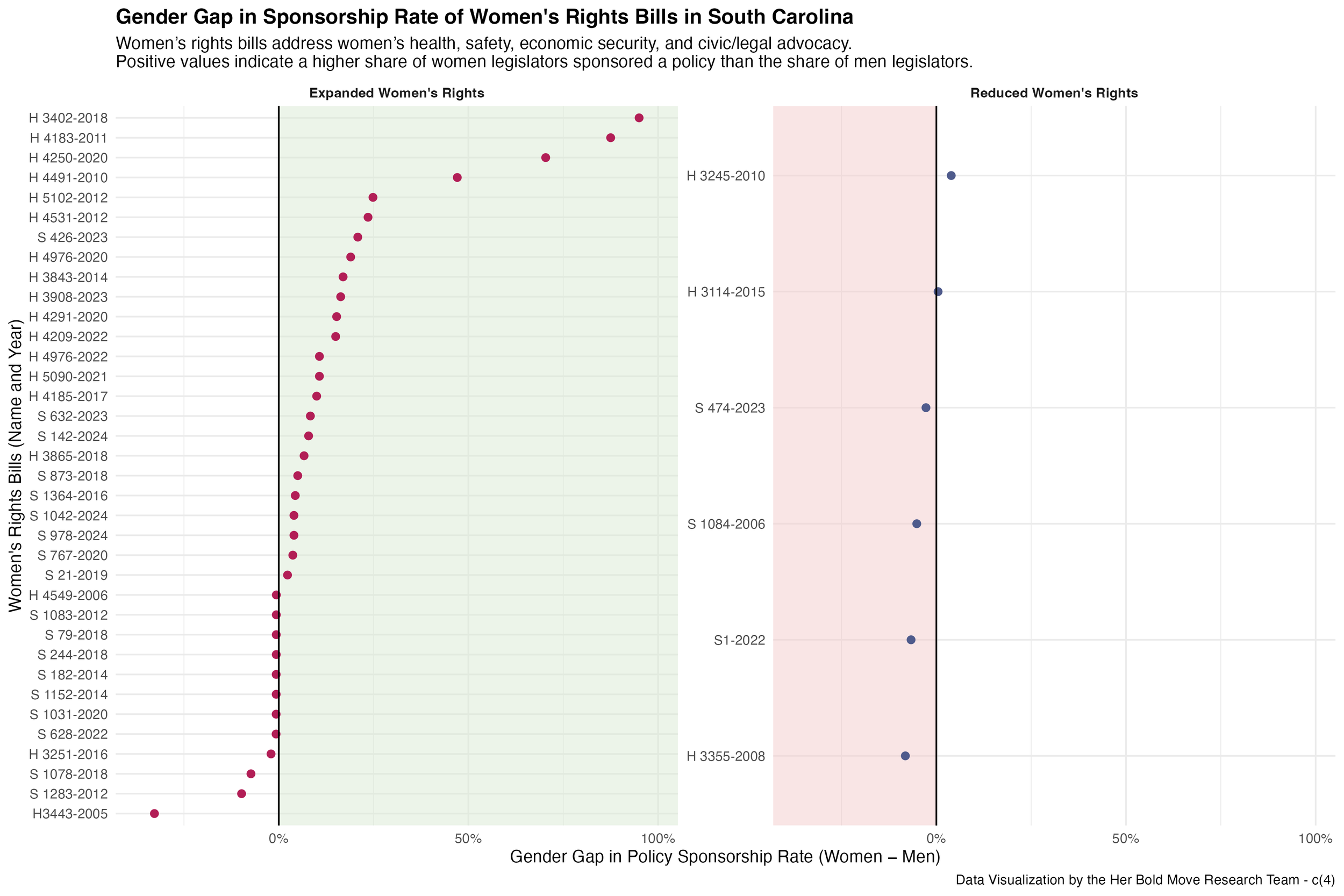
Table 3: Gender gap in sponsorship rate of women’s rights bills in South Carolina. Positive values indicate a higher share of women legislators sponsored a policy than the share of men legislators.
The pattern becomes even more striking when we examine legislation with the highest proportions of women legislators sponsoring the bill. About ¾ of these bills attracted bipartisan support, indicating that issues affecting women’s lives often transcend traditional partisan lines. In these cases, gender, rather than party affiliation, appears to be a more powerful indicator of support for policies expanding women’s rights.
South Carolina’s Sister Senators demonstrated this pattern in practice. Working across party lines, they built a strong force of resistance against a near-total abortion ban written by people who would never face the medical risks of pregnancy. Their success illustrates how women’s representation affects which issues receive attention, who advocates for them, and whether they become law.
Women’s Safety and Economic Security Remain Largely Unaddressed
The consequences of underrepresentation in South Carolina extend beyond women’s health policy. Our research reveals how legislative action related to women’s safety and economic security has been remarkably limited.
In 2024, over 2,000 cases of sexual assault were reported in South Carolina, and almost half of the survivors were under the age of 18. Yet our analysis identified no enacted legislation addressing women’s protections against sexual assault, human trafficking, stalking and harassment, while other states have passed numerous laws to address this issue.
A similar pattern emerges when we examine legislative action for women’s economic security, particularly efforts to address South Carolina’s gender wage gap. Women in the state earn approximately 79 cents for every dollar earned by men, while Black women earn approximately 58 cents for every dollar earned by white men. Yet none of the three bills identified in our research as related to women’s economic security meaningfully address pay inequality or seek to narrow these disparities.
Table 4 below shows how lawmakers have devoted considerable attention to regulating women’s reproductive health, but far less attention has been given to the safety and economic challenges that also shape women’s daily lives.
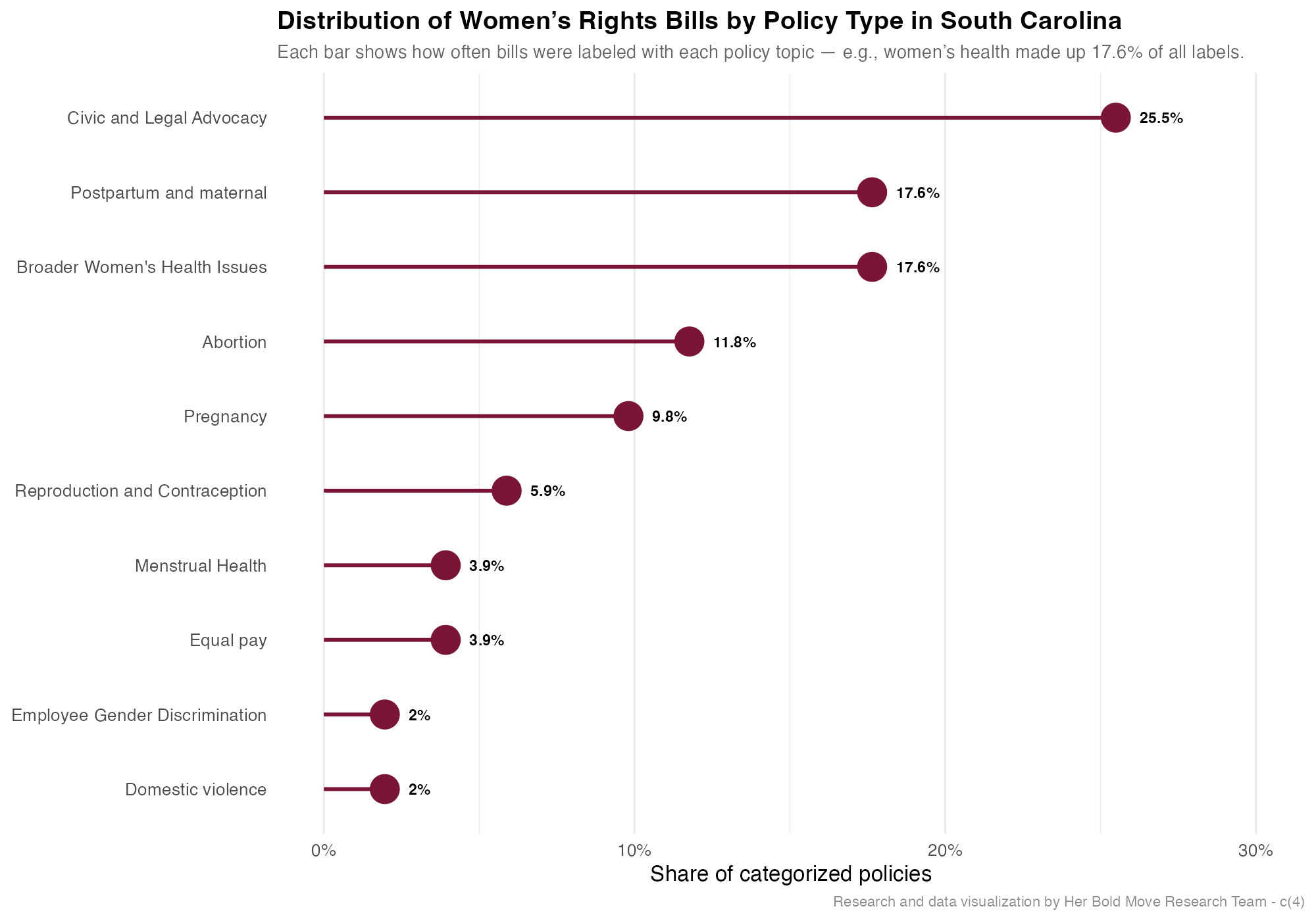
Table 4: Distribution of women’s rights bills by policy type in South Carolina.
Women Belong in Public Office – Our Rights Depend on Them
The story of South Carolina’s Sister Senators demonstrates a striking example of the vital impact of women’s representation. When women have a seat at the table, they bring perspectives, experiences, and priorities that might otherwise be absent from legislative debate. Five women in a chamber of 46 were enough to change the course of a near-total abortion ban.
That’s why Her Bold Move is focused on states with the lowest number of women in government. We target races up and down the ballot and support emerging candidates who could shrink the gender gap in public offices. Electing more women to the rooms where decisions are being made about women is not only a matter of representation, but a mandate to expand women’s rights and improve women’s lives across the country and the world at large.
About the Her Bold Move Research Center’s Database:
Her Bold Move’s database is a collection of nearly 4,000 policies passed across 50 states over the past 20 years. The team manually coded policies passed across each state legislature relating to women’s health, safety, economic security, as well as civic and legal advocacy. For each bill, we recorded the primary sponsor, the total number of sponsors, as well as the gender and party composition of the bill’s sponsors and the legislature at the time each bill was passed. Using this data, we created visualizations to capture the correlation between the percentage of women in the legislature to the quantity and quality of policies passed. Note that our data and statistical analysis show correlation only — not causation — between gender and policy outcomes.
From the Her Bold Move Research Center:
Ainav Rabinowitz, Research Director
Charlotte Bell, Research Assistant
Barney Riley, Research Coordinator
Willow Maisel, Data Analyst
Kayla Tjenalooi, Data Analyst