
Lessons from the Only State Government with 61.9% Women Lawmakers: “When Women do Better, Families do better, Nevada Does Better."
What Nevada’s female-dominated legislature tells us about representation, and the outcomes for women’s health, safety, and economic security.
Presented by The Her Bold Move Research Center, 2026
By Ainav Rabinowitz
Data Visualizations by Her Bold Move Research Center: Willow Maisel and Kayla Tjenalooi
When Assemblywoman Sandra Jauregui ran for her seat in 2016 to represent District 41, a male lobbyist offered to drop off a campaign check at her home on a Friday night. “Do you think any of my male colleagues ever got asked that?” she asked me over the phone. Fundraising as a woman candidate in Nevada was no easy feat at the time, particularly due to exclusive lobbying groups. Jauregui told him to meet her at a coffee shop the following week instead. “In 2016, they told me, 'You're too bubbly; you shouldn't wear poofy skirts. People aren't going to take you seriously.’ I had a male lobbyist offer to bring money to my house. And I had to fight tooth and nail harder than my male colleagues to fundraise for my race.”
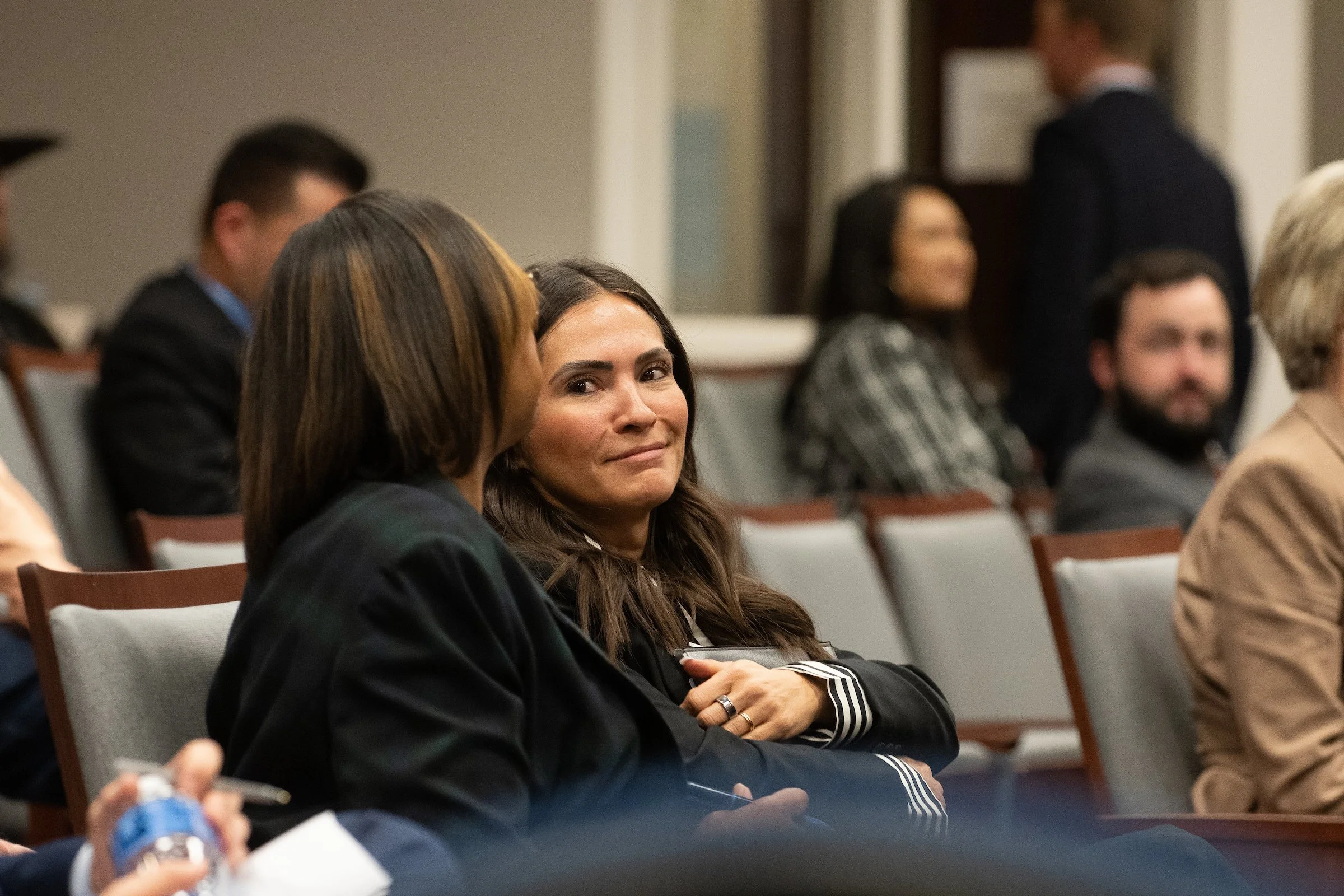
Assembly Majority Leader Sandra Jauregui (D-Las Vegas), right, and Assm. Daniele Monroe-Moreno (D-North Las Vegas) during a hearing of the Assembly Committee on Revenue inside the Legislature in Carson City on Feb. 27, 2025. (David Calvert/The Nevada Independent)
Ten years later, the number of Nevada women in the legislature has doubled and Nevada leads the nation in representation for women in government. Assemblywoman Jauregui is now the Democratic Majority Floor Leader and the Democratic nominee for Lieutenant Governor. According to Jauregui, these changes also shifted the culture of the legislature. “That's not the same environment anymore, and I'm so proud of that. And it's because of the work that we've done to show that hey, we're here and we're going to lead, and you're going to take us seriously.” Jauregui explained that every time a woman was elected, it motivated the women in the legislature to actively recruit and elect even more women. “It just multiplies,” she explained. Then came an increase in the number of women holding leadership positions. In 2023, women held nine out of the ten committee chair titles.
The key shift occurred in 2019, when the percentage of women in the Nevada state legislature jumped from 39.7% to 52.4%. If Nevada were an independent country, its share of women in the legislature would rank fourth in the world. The Her Bold Move Research Center’s database revealed that as the percentage of women in the Nevada legislature increased, so too did the number of policies passed relating to women’s health, safety, economic security, and civic and legal advocacy. Legislative progress was reflected not only in the growing number of women’s rights bills passed, but also in the diversification and expansion of policies aimed at empowering women. The majority of these policies had a higher share among women lawmakers supporting them than among male lawmakers. In fact, starting in 2019, both Republican and Democratic women began to show an outsized participation in their own party.
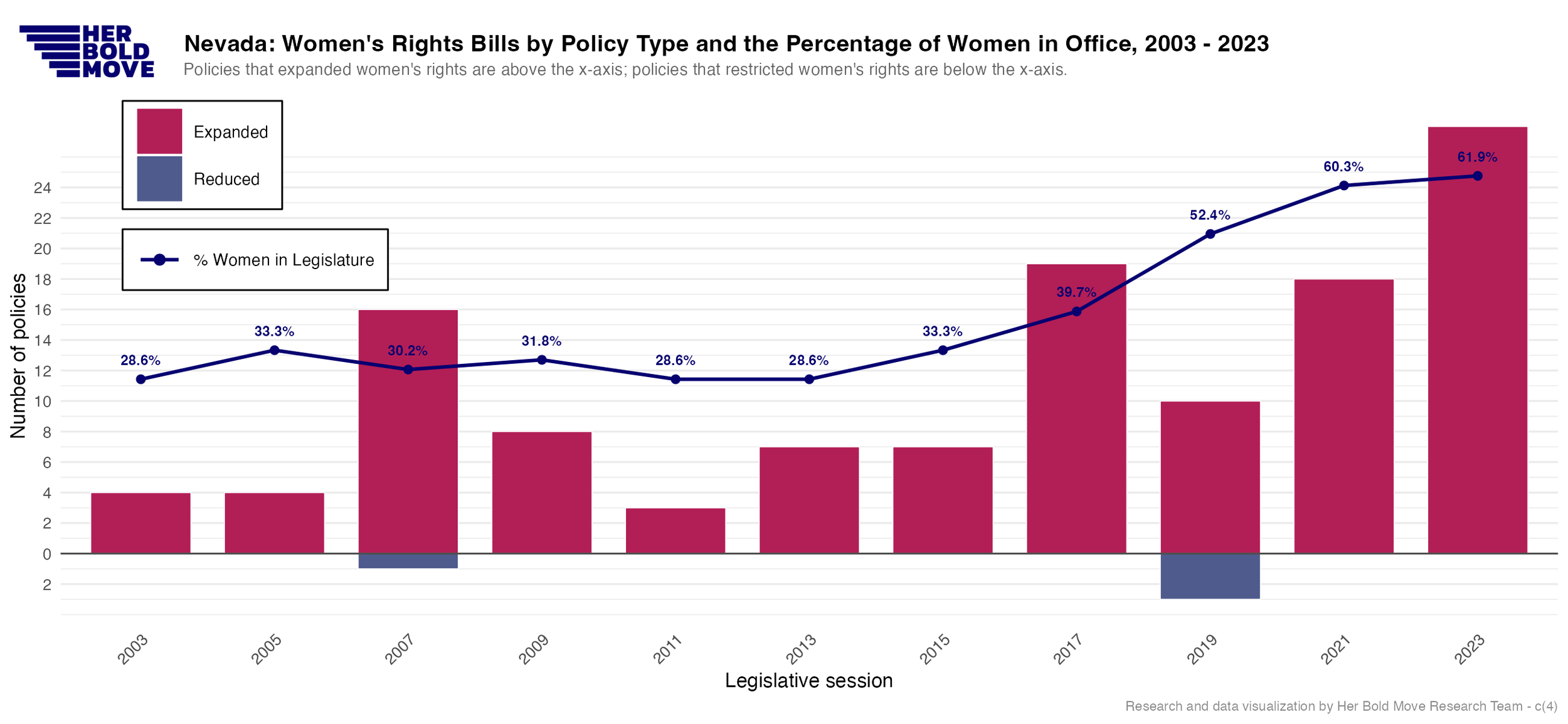
Figure 1: Nevada women’s rights bills by policy type and the percentage of women in office, 2003 - 2023
Before Women Made Up the Majority
Assemblywoman Kathy McClain, who represented District 15 from 1998 to 2010, was a leading advocate for legislation advancing women’s health, safety, and economic security. Her persistence was particularly evident in her efforts to secure funding for the Women’s Research Institute of Nevada, sponsoring legislation on three separate occasions before finally succeeding in 2007. Her legislative priorities included establishing the Nevada Council for the Prevention of Domestic Violence and formally recognizing April 28th, 2009, as Equal Pay Day. Notably, McClain was also the first to reintroduce a resolution to ratify the Equal Rights Amendment in the Nevada Assembly. The resolution passed both legislative chambers, with sponsorship from 16 Democratic women and 10 Democratic men. Unfortunately, it did not pass the 2010 ballot.
As seen in Figure 2, McClain’s legislative advocacy reflects the broader priorities of Nevada’s women’s rights policymaking before 2019, when legislation overwhelmingly focused on domestic violence prevention and protections for women’s safety.
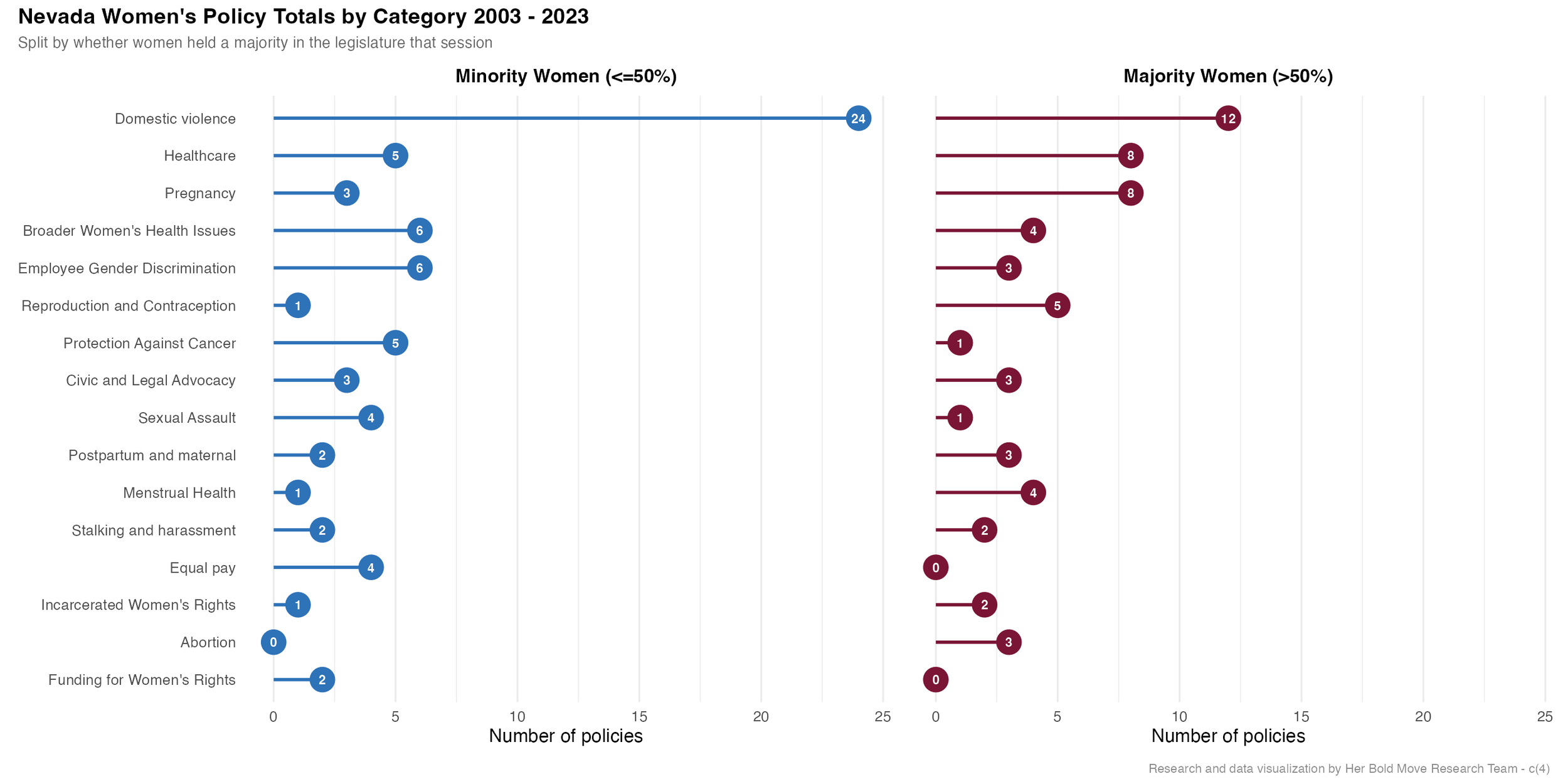
Figure 2: Nevada Women’s Policy Totals by Category
Figure 3 tracks the gender gap in sponsorship for women’s rights legislation passed in Nevada over the past two decades. The graph shows that 48 bills had higher sponsorship rates among women, compared to 17 with higher sponsorship rates among men. Notably, the two bills classified as restricting women’s rights attracted higher sponsorship rates among men than women.
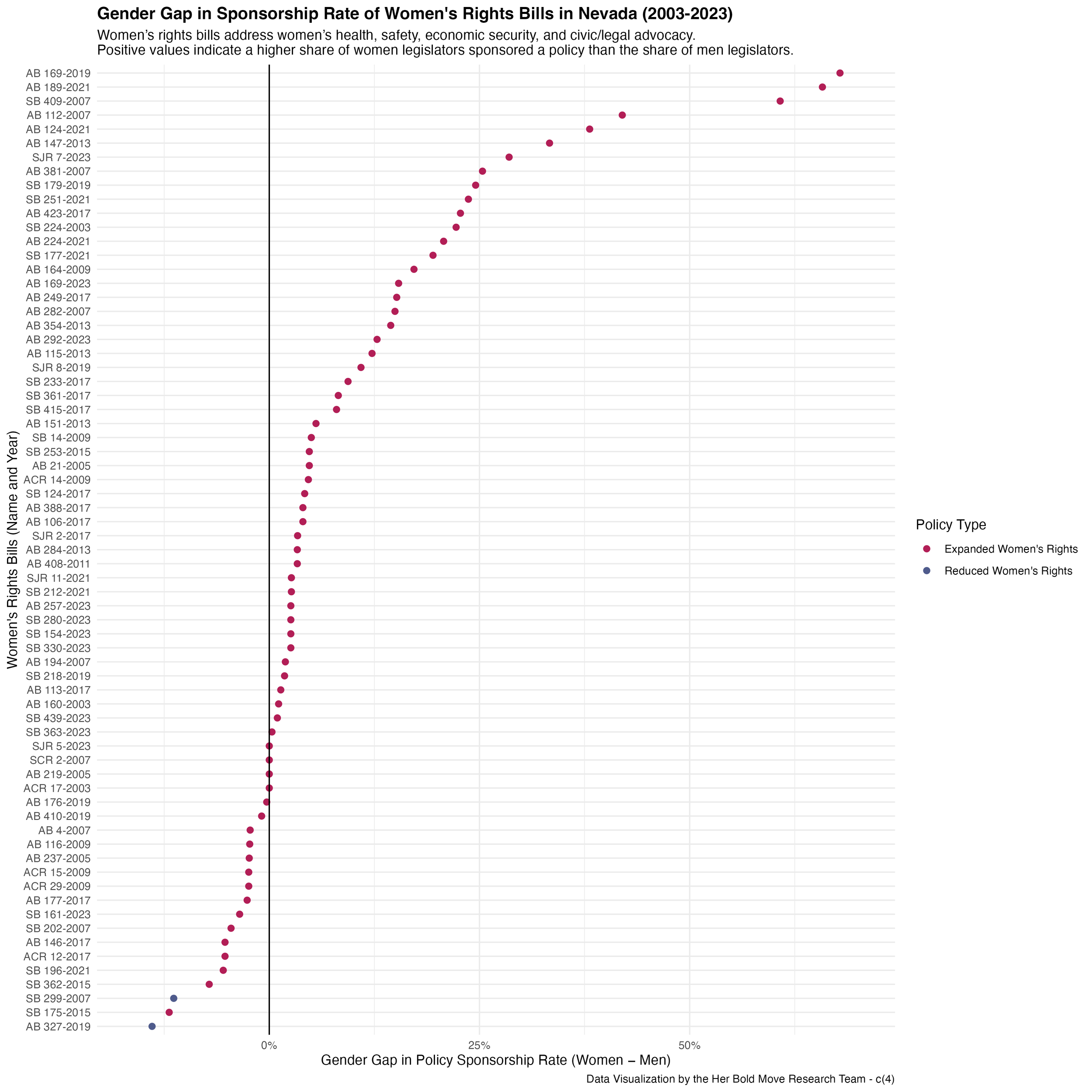
Figure 3: Gender gap in sponsorship rate of women’s rights bills in Nevada. Positive values indicate a higher share of women legislators sponsored a policy than the share of men legislators.
These findings confirm the trends identified in Figure 2. Before 2019, Nevada’s women’s rights policies predominantly focused on women’s safety, particularly domestic violence prevention. In legislatures where women remain underrepresented, policies addressing women’s safety may attract broader legislative support because they overlap with criminal justice and public safety priorities. Compared with other policies in the Her Bold Move Research Center database, male legislators tend to collaborate more on legislation for domestic violence prevention. As seen in Figure 4, Democratic women and Democratic men exhibit nearly equal within-group sponsorship rates for legislation addressing women’s safety, including domestic violence, sexual assault, stalking, and harassment. However, across most other categories of legislation, Democratic women consistently demonstrate higher sponsorship rates than any other gender-party group.

Figure 4: Nevada sponsorship of expansive women’s rights policies by demographic
What does it look like to empower women? Sandra Jauregui can show you.
In 1977, State Senator Jim Gibson called for a special evening session for Nevada to vote on the Equal Rights Amendment (ERA) Resolution. The Assembly’s final vote included 15 “ayes,” 24 “nays,” and 1 “absent.” Of the 24 assemblymen who voted against the resolution, 8 had taken contributions from Nevadans with the promise of voting in favor of the ERA. Assemblywoman Sue Wagner “collapsed at her desk” when the results came in, stating “It boggled my mind because we’re talking about a basic fundamental philosophical principle of equality. It was like a slap in the face to women that we were just not important enough or equal.” Forty years later, with the leadership of State Senator Pat Spearmen, the resolution to ratify the Equal Rights Amendment finally passed, signaling a new era in Nevada politics.
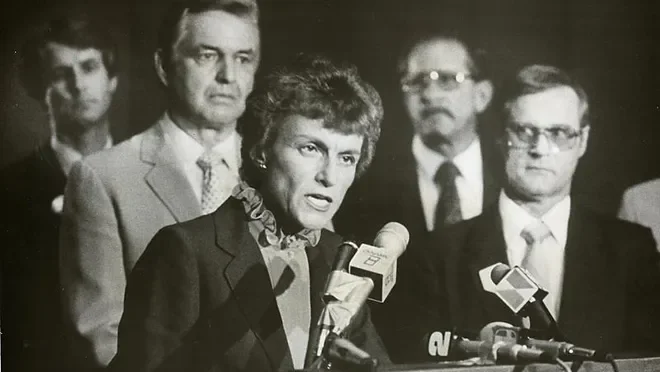
State Senator Sue Wagner during a news conference opposing a question before the Nevada State Legislature in 1984. Other legislators, from left, are Assemblyman Bob Sader, Senator Bill Raggio, Assemblyman Keith Henrickson and Assemblyman Bob Stone. Marilyn Newton/RGJ File.
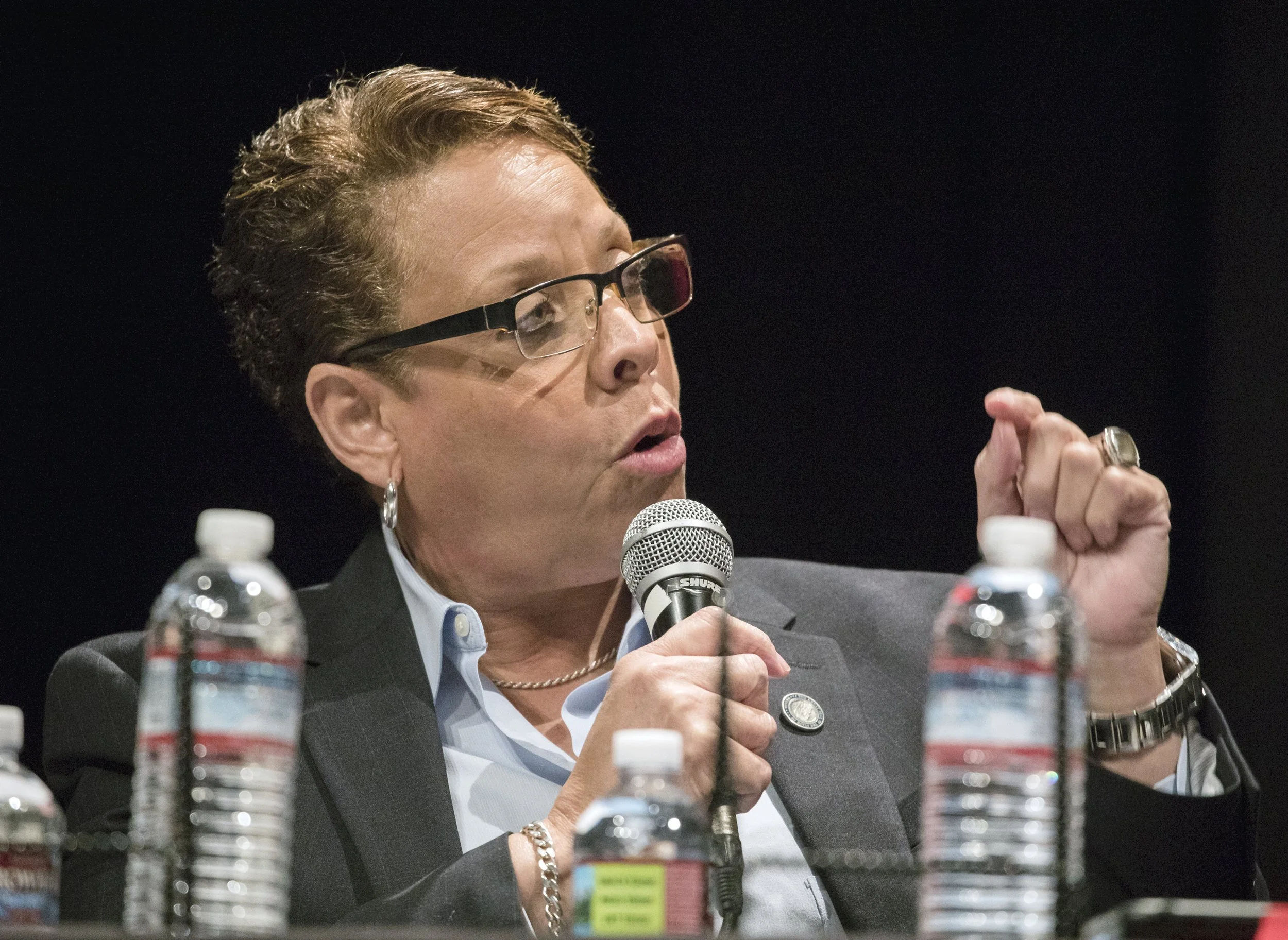
Congressional District 4 Primary candidate Patrica Spearman during a forum sponsored by the Clark County Black Caucus on Tuesday, Feb. 27, 2018. (Jeff Scheid/The Nevada Independent)
The percentage of women in the legislature shot up to 52.4%, in the following legislative session (2019) marking Nevada as the first state in United States history to reach a female majority in its legislature. This shift brought Nevada into the spotlight, sparking a national debate about how gender parity affects women’s lives.
Nevada, despite having a female majority, also faces a series of factors that shape policy outcomes: the legislature only meets for 120 days every two years, the persistent gender gap in lobbying groups, and the immense power of the Clark County Commission – the seven member group that controls Nevada’s largest county. However, despite the existing challenges Nevada faces in the legislature, the Her Bold Move Research Center’s database revealed that after achieving a female majority in the legislature, women’s rights policies diversified and the activity of Republican and Democratic women in their respective parties shot up.
While Republican and Democratic women in the legislature of Nevada are often divided on the issue of abortion, our data showed that starting in 2019, both Republican women and Democratic women were leading on women’s rights policies within their own parties. Since 2019, Republican women made up between 50-80% of sponsors in their own party, and Democratic women made up between 75-85% of sponsors.
This new era led to the passage of laws that transformed the landscape of women’s rights in Nevada; bills passed by women for women. In 2019, lawmakers established a maternal mortality review committee, followed by expanded Medicaid pregnancy coverage in 2021. Other legislation efforts advanced reproductive freedom, equal rights, and protections against discrimination toward women — including the ERA and CEDAW convention. Other bills, such as SB 179, SB 154, and SB 280, strengthened reproductive rights and legal protections.
Among these reforms, the 2019 Trust Nevada Women Act was considered an unprecedented, “forward-thinking” legislation, repealing criminal penalties related to abortion, revised what lawmakers called “antiquated” informed consent laws, and removed a legal mechanism used to punish abortion providers if Roe v. Wade was overturned. The primary sponsor of the bill was Democratic Senator Yvanna Cancela, alongside 18 Democratic women and 9 Democratic men co-sponsors — including Assemblywoman Jauregui. “We did this as a female Democratic majority with a Democratic governor because we knew that there was a possibility that Roe v. Wade would be repealed,” she explained.
Jauregui described that Nevada’s pro-choice segment of the legislature is often on the defensive, and she attributed her ability to block restrictive bills to the Democratic female majority. Jauregui feels a responsibility not just for Nevadans, but to neighboring states. “I carried a bill in 2025 to keep doctors' names off the bottles of mifepristone and misoprostol — the miscarriage management and abortion care drugs — because we have great protections for reproductive rights here in Nevada, but neighboring states like Arizona and Utah don't. So we are a big service provider for women who cross the state lines to come get women's health care here.”
For Assemblymember Jaregui, access is just as important as choice. Her campaign focuses heavily on access to healthcare. In the upcoming legislative session, she is launching a Rural Women’s Healthcare Task Force to tackle the “maternal care desert.” Only 29% of rural hospitals in Nevada have labor and delivery services. Most women use midwives and doulas and do not have a back-up plan in case something goes wrong. “What's choice without access? And if women in rural Nevada don't have access to labor and labor delivery services, do you think they have access to any family planning or reproductive health care services? They don't, and I think we need to fix that.”
When women do better, nevada does better.
Assemblywoman Sandra Jauregui is now hours away from her election. For Jauregui, electing more women and passing more women’s rights legislation is about securing a better future for Nevada as a whole. “When your state legislature looks like the people it represents, everybody benefits from the policies that get passed [...] we also focus on the same issues that our Democratic male colleagues would. We bring small business issues. We bring education bills. We bring affordable healthcare bills. We bring economic development bills. We care about all of these same things, too, in addition to all of the other policy priorities that are unique to us.”
The principle at the heart of Nevada women's political leadership: “When women do better, families do better, Nevada does better.” From State Senator Wagner to State Senator Spearman and Assemblywoman Jauregui, women in Nevada have proven that fact again and again.
The data show: When women are well-represented in the legislature, more women get elected, and more pro-women policies get passed.
That is why Her Bold Move endorsed twelve candidates in Nevada this year, and why the organization continues to support women running for office across the country, particularly in states where women remain underrepresented.
Nevada has shown what becomes possible when women gain political power. Her Bold Move is on a strategic mission to see Nevada’s progress become the rule, rather than the exception.
About the Her Bold Move Research Center’s Database:
Her Bold Move’s database is a collection of nearly 4,000 policies passed across 50 states over the past 20 years. The team manually coded policies passed across each state legislature relating to women’s health, safety, economic security, as well as civic and legal advocacy. For each bill, we recorded the primary sponsor, the total number of sponsors, as well as the gender and party composition of the bill’s sponsors and the legislature at the time each bill was passed. Using this data, we created visualizations to capture the correlation between the percentage of women in the legislature to the quantity and quality of policies passed. Note that our data and statistical analysis show correlation only — not causation — between gender and policy outcomes.
From the Her Bold Move Research Center:
Ainav Rabinowitz, Research Director
Charlotte Bell, Research Assistant
Barney Riley, Research Coordinator
Willow Maisel, Data Analyst (volunteer)
Kayla Tjenalooi, Data Analyst