
The Numbers are stacked against them. How are they winning?
The Surprising Way Women are Gaining Ground in West Virginia
Representative Kayla Young is one of just two Democratic women in West Virginia’s legislature. In a Republican and male-dominated state with a near-total abortion ban, our team learned how women legislators have found ways to advance laws that are positive for women – and even work across party and gender lines to get them passed.
Presented by The Her Bold Move Research Center, 2026
By Ainav Rabinowitz
Data Visualizations by Her Bold Move Research Center: Willow Maisel and Kayla Tjenalooi
When Representative Kayla Young received a call from a constituent asking her to advocate on her behalf, the first thing she did was call her Republican male colleague in the West Virginia legislature. Passing a law that mandates insurance coverage of cooling caps for women in cancer treatment would require her to cross party and gender lines: “Because they're not passing the bill if it's got my name on it. The climb is so much higher.” In 2025, women in West Virginia made up 11.9% of the legislature — 16 women out of 134 legislators. This put West Virginia at its lowest point since 1980, when women made up only 7.5% of the legislature.
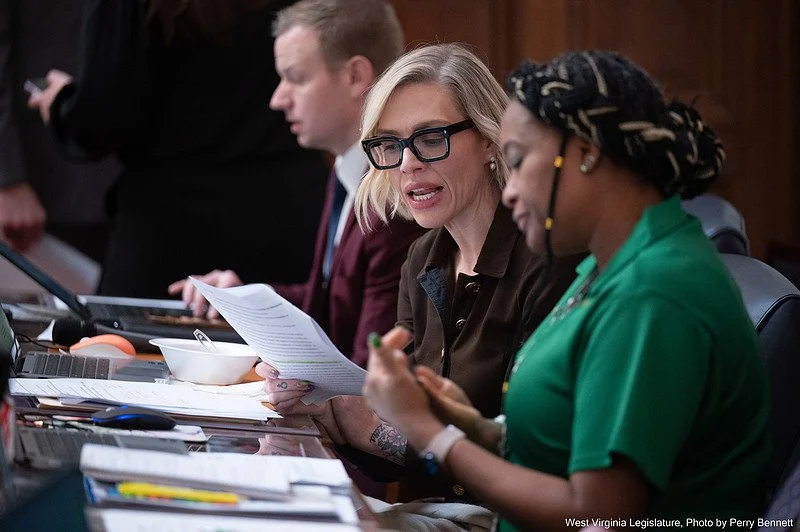
Dels. Kayla Young (D-Kanawha) and Anitra Hamilton (D-Monongalia) are the only two Democratic women lawmakers in West Virginia’s legislature. (Photo by Perry Bennett/West Virginia Legislative Photography)
Thanks to Representative Young’s phone call, HB 4089 will require health insurance carriers to cover scalp cooling systems for cancer treatment and will take effect on January 1, 2027 — with Delegate Walter Hall (R) as the primary sponsor. This law is significant for women in West Virginia, given that the state has among the worst rates of cervical and breast cancer in the country. According to the Her Bold Move Research Center’s database, zero bills relating to cancer and women passed between 2005 and 2025.
The Her Bold Move Research Center’s database tracks more than 4,000 policies, including every policy passed in West Virginia over the past two decades relating to women’s health, safety, economic security, and legal rights. For each policy passed into law, we recorded the gender and party affiliation of the bill’s sponsors to understand the type of legislation women are likely to champion in comparison to men.
Of the sixty women’s rights policies passed over the last two decades in West Virginia, “penalty-enhancement” legislation accounted for an outsized share of the state’s policy activity, in comparison to legislation like HB 4089 that focuses on women’s issues beyond basic public safety. Put simply, there were far more reactive, punitive bills in comparison to proactive, expansive bills to improve women’s access to healthcare and economic security. As women’s representation in West Virginia declines and abortion restrictions are mounting, the demand for women to run for office and have a seat at the table in this state becomes more urgent.
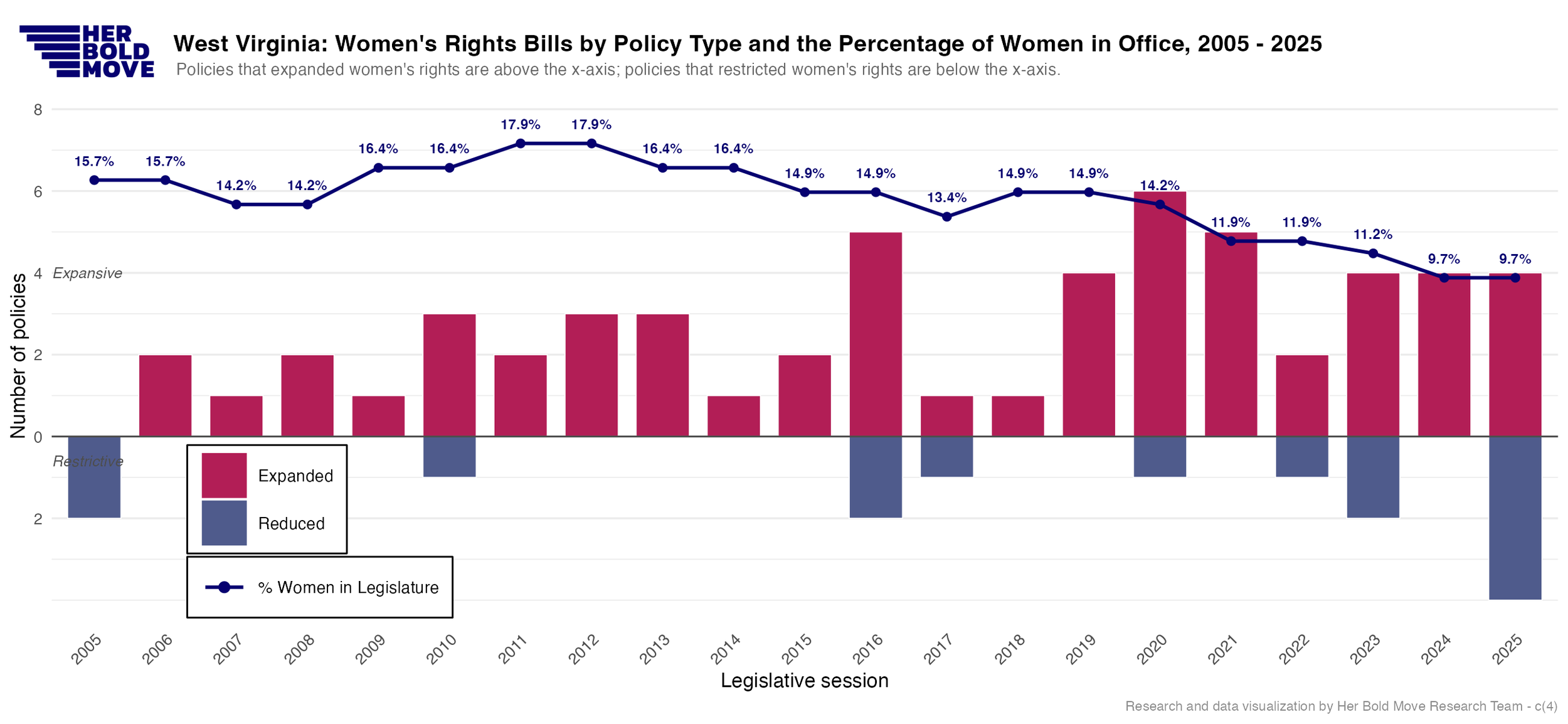
Figure 1: Women’s Rights Bills by Policy Type ad the Percentage of Women in Office, 2005 - 2025
Fewer Women in the room - reasons and outcomes
From 2005 to 2015, West Virginia lawmakers passed three policies that reduced women’s rights. From 2015 to 2025, that number more than tripled. In that same period, the number of women in the legislature dropped from its peak of 17.9% in 2012 to 9.7% by 2025, as seen in Table 1.
Representative Young has served in office since 2020 and has felt this decline over time, especially when, at one point, she was the only woman in the Democratic caucus. “I ended up carrying a lot of the bills that a lot of women that came before me [had] introduced…because they're great [policies], and I want them to happen, related to all kinds of women's issues.” In 2025, Young introduced 129 bills, ranking her 8th out of 100 delegates in terms of sponsorship, and second in terms of lead sponsorship.
There are a number of reasons for West Virginia’s decline in women legislators over time. In 2014, Republicans gained control of both chambers of West Virginia’ legislature, which they have maintained. They have also held the governorship since 2018. The partisan divide in women’s representation has been long documented, with nearly two-thirds of women in state legislatures across the U.S. identifying as Democrats. Scholars have pointed to lower recruitment efforts of women, particularly by West Virginia’s Republican party. Structural barriers also prevent women from running, such as the lack of adequate childcare in West Virginia, and the low salary and part-time nature of the legislature which requires job flexibility and/or supplemental pay.
Data from our research indicate that the lack of women’s representation affects sponsorship patterns (which lawmakers prioritize which issues). A 2016 study found that women’s rights issues are often seen to be “owned” by the Democratic Party, giving Democratic women the space to advocate for women’s issues. Republican women, according to leading women’s rights scholar Michele Swers, face a “more complex calculus” — one shaped by conflicting pressures and expectations of their voters and party leadership. Separate studies have also found that moderate Republican women in Congress are still more likely to sponsor social welfare and women’s rights focused bills than their male colleagues.
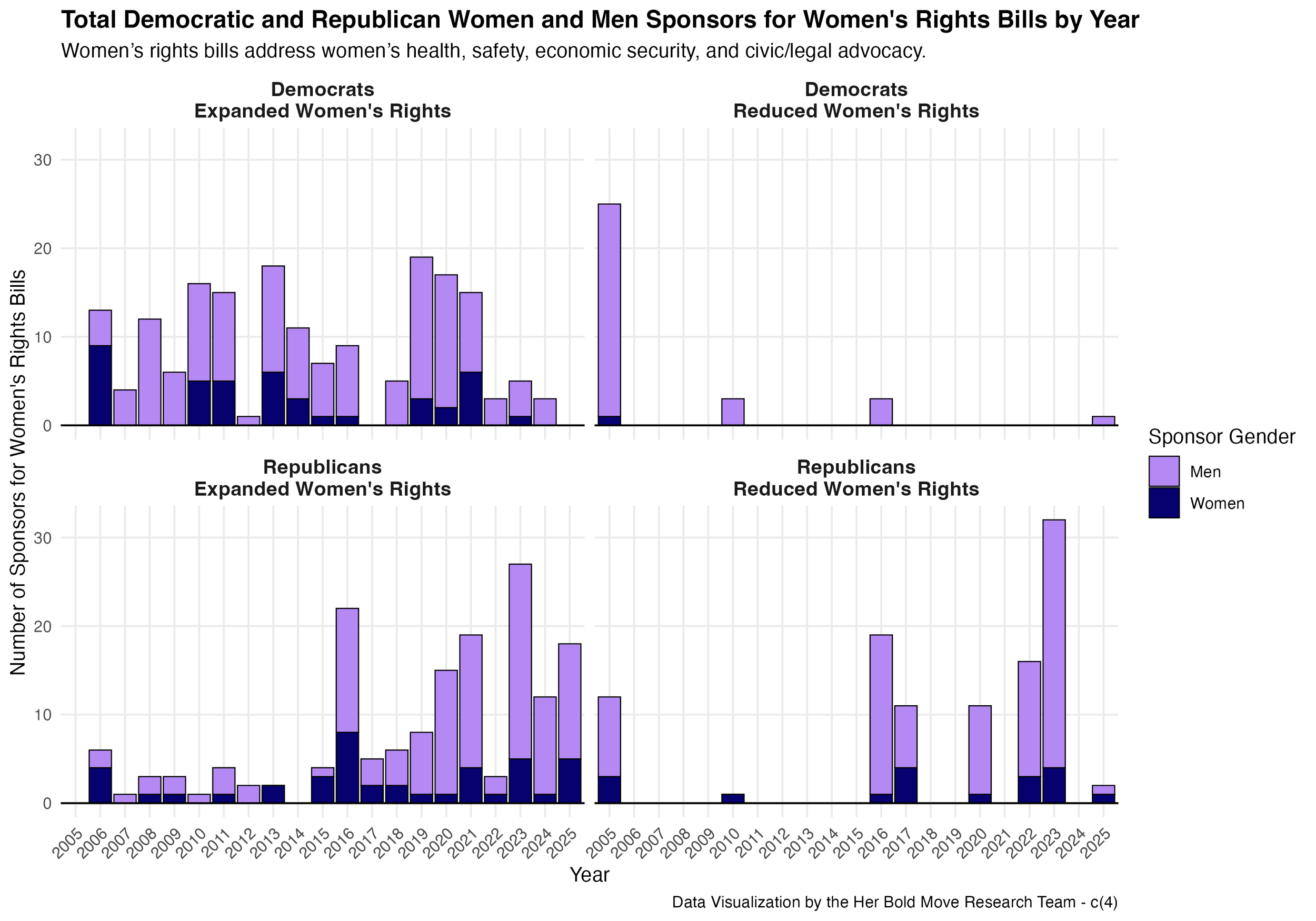
Figure 2: Total Democratic and Republican Women and Men Sponsors for Women’s Right Bills by Year in West Virginia
As the share of women represented in West Virginia’s legislature has decreased over time, male legislators have gained increasingly more input on women’s issues. As seen in Table 2, in West Virginia, efforts to impose restrictions on women’s rights are led by Republican men. Since 2016, sponsorship of bills reducing women’s rights has surged, peaking in 2023, when women’s share of the legislature fell to near its lowest level in two decades at 11.3%. Democrats once sponsored most bills expanding women’s rights, but as Republicans took control of the legislature after 2014, more bills restricting women’s rights were passed; sponsored mostly by Republican men.
“Protecting Women” or Expanding the Criminal Code?
Policies covering women’s safety accounted for about 42% of women-related legislation passed in West Virginia. The highest percentage, 20.5%, of these policies covered sexual assault. This was followed by postpartum and maternal care policies, and then, restrictive policies about abortion. To put this into perspective, in Colorado, women’s health bills made up 71.7% of all women-related policies, with “safety” accounting for just 8.1% of these bills.
Bills relating to sexual assault also increased after 2012, when the percentage of women in the West Virginia legislature reached its peak. Between 2012 to 2025, the number of bills covering sexual assault nearly quadrupled from 7.1% to 26.7% of women-related legislation. The attention to the issue of sexual assault has led to progress in West Virgina. Representative Young pointed to SB 190, which passed in 2024 and criminalized “non-consensual sexual contact and assault between spouses.” The progress in this policy category is largely due to more collaboration across the aisle on criminal justice issues.
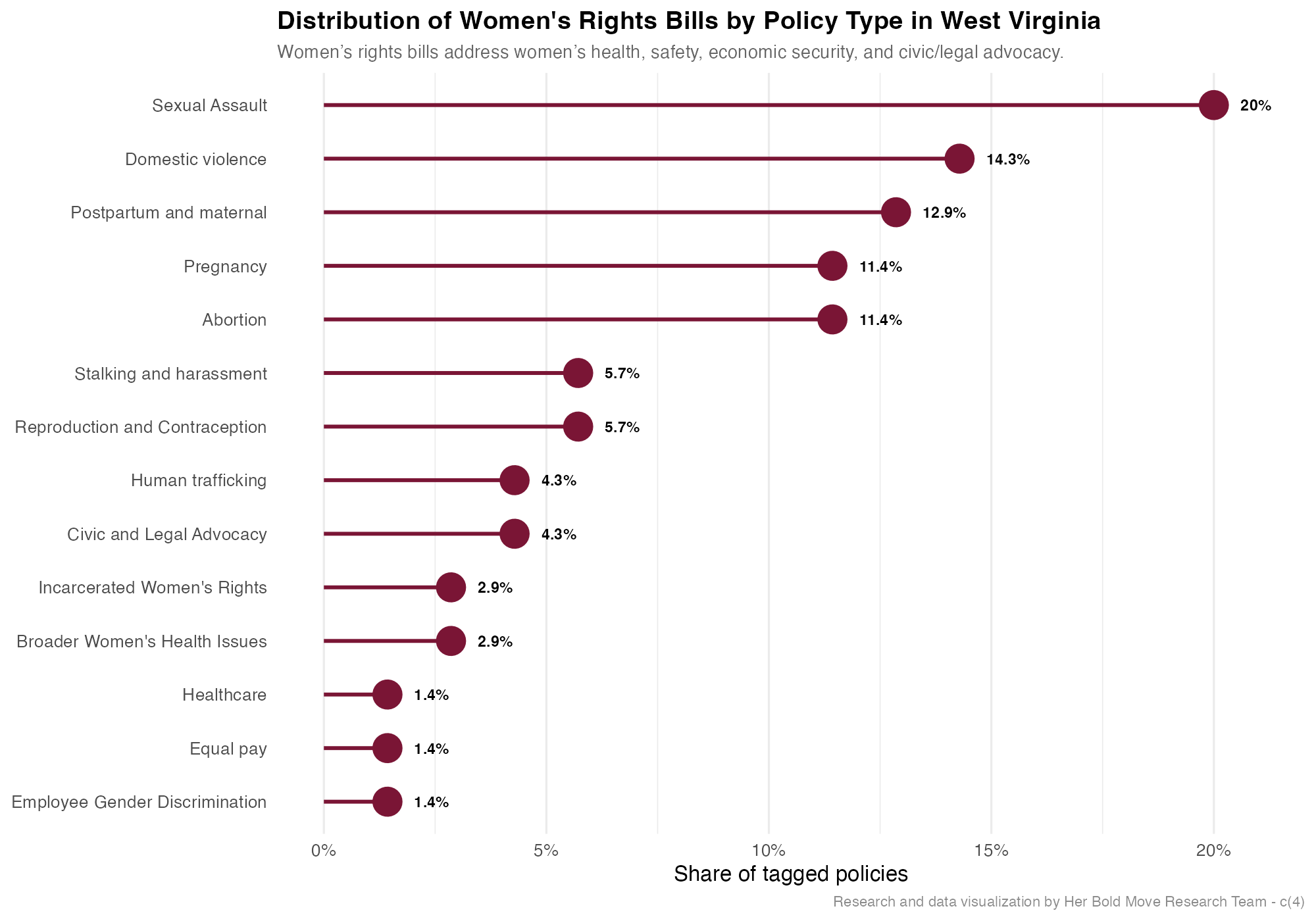
Figure 3: Distribution of Women’s Rights Bills by Policy Type in West Virginia, 2005 - 2025
“I think it's less that they particularly care about women and children and more that they just want to be insanely tough on crime,” Representative Young explains. “[They] think the way to do that is enhancing penalties. It's the easiest. Nobody votes against those things, so if they can run those bills, they're [going to] pass.”
Representative Young’s perspective has been affirmed by political scientists, who show that Republican women’s initiatives on domestic violence and sex offenders were closely aligned with those of Republican men. Other studies have also focused on how often gender-based violence legislation tends to pass without attention to, as Weissman writes, “economic uncertainty and inequality as a context for gender based violence.” In other words, while punitive sexual assault legislation is important, it would be helpful to simultaneously craft legislation that addresses women’s ecomomic status, access to financial resources, and equality in the workplace.
Women in West Virginia earn 83 cents per $1 earned by men, with Black women earning about 72 cents. In contrast, the “motherhood wage gap,” which is how much mothers earn for every dollar a father makes, is 61 cents per 1 dollar. The Her Bold Move Reseach Center’s database notes only one bill covering the topic of “economic security” passed in 2025, SB 837, and it was tagged as “restrictive” due to the fact that it eliminated the West Virginia Office of Equal Opportunity.
The Untold Story of Bill Sponsorships
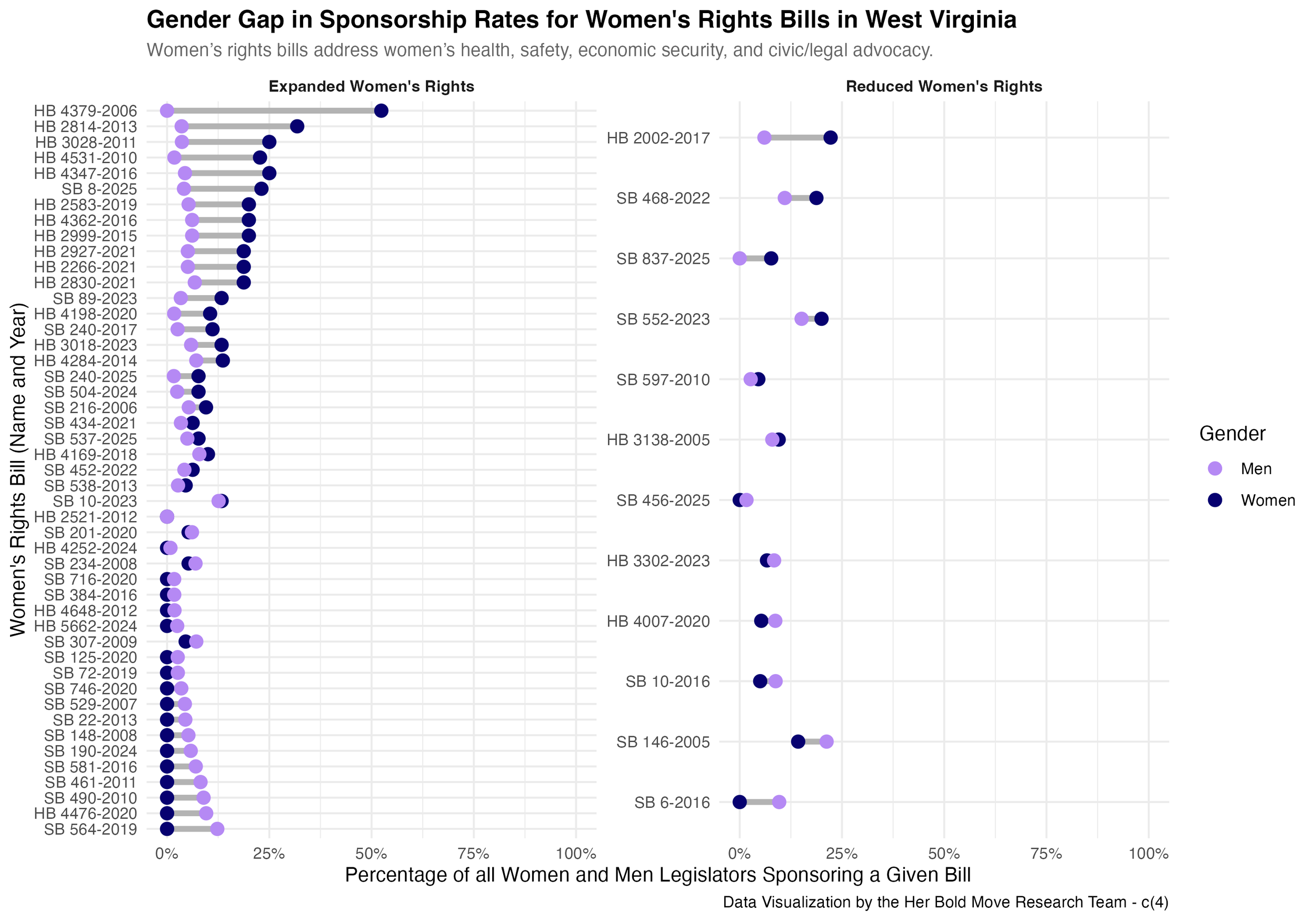
Figure 4: Gender Gap in Sponsorship Rates for Women’s Rights Bills in West Virginia
When our team was analyzing West Virginia’s bills with the highest rate of women sponsorship, a clear trend emerged. Women were more likely to advocate for bills related to access: insurance coverage, protections for incarcerated pregnant women, the expansion of maternal mortality policy teams, family plans, caregiving expenses, and newborn care. HB 4379, a bill which relates to “insurance coverage for mammograms, pap smears and human papillomavirus,” had the largest gender gap in sponsorship, with zero male sponsors. West Virginia has among the worst rates of cervical and breast cancer in the country. Indeed, a 2016 study between 1969 and 2011 showed that cancer incidents were declining in every region of the country except Appalachia, where breast cancer is less likely to be detected early than anywhere else. The West Virginia women who led the passage of this bill were ahead of their time, pushing it through four years before the Affordable Care Act was passed and the legislation was nationally required.
Seen in Table 4, HB 2999 related to neonatal abstinence centers, while HB 4347 similarly provided pregnant women priority to substance abuse treatment. This is significant given that West Virginia is afflicted by Neonatal Abstinence Syndrome births, teenage pregnancies, and opioid usage during pregnancy. HB 4531, in turn, set limits on shackling pregnant women, “except in extraordinary circumstances.” The bill is in tune with wider problems affecting the state: a 2020 study showed that from 1978 to 2019, mass incarceration of women grew in West Virginia by 2,731 percent, largely due to poverty, addiction, and living in rural areas.
HB 3018 was passed by Representative Young, which intended to establish 18 as the age of consent to marry, and removed the ability of minors to obtain consent to marry through their legal guardian. As Young explains, “banning child marriage usually helps more girls than it does boys.” She heard from county clerks, as she told 13News, who said, “‘Hey, this is still a problem. Out-of-state folks are coming here to get married because we’re a border state for so many other states who have banned child marriage.”
Despite Young’s efforts, the final version of HB 3018 was not a full ban on child marriage and allowed marriage at the age of 16 as long as the minor received parental consent.
Abortion Ban Policies Passed with Zero Democratic Women, but 17 Democratic Men
The Her Bold Move Research Center’s database for West Virginia includes ten abortion-related bills, all of which reduced women’s rights. As seen in Table 4, they were passed by an almost equal proportion of women and men. However, a key distinction is that zero Democratic women legislators sponsored any of those bills, while Democratic men legislators were lead sponsors for two restrictive bills about abortion, including SB 146, which included 17 Democratic male sponsors.
According to Representative Young, the fact that Republican women sponsored some restrictive bills is indicative of what she calls, “tokenization of women” in the legislature. “They almost use them as shields,” She said. “[Republican women] are willing participants, but [Republican Men] also use them.”
Representative Young went on to explain that, while sponsorship can sometimes signal a lawmaker’s deeper concern for a bill, “Sometimes the sponsorship doesn't matter as much, because they meet as a [Republican] caucus behind closed doors and figure out strategically who sponsors should be. It's not necessarily that those people are the champions of those issues. They just want it to be certain people, but you could never know that just from research.”
Many abortion-related bills in the Her Bold Move Research Center’s database are framed by lawmakers as “pro-women” bills; SB 597 required a woman seeking abortion to see a fetal ultrasound image, while SB 146 established the “Unborn Victims of Violence Act.” Other bills misconstrue medical terms, such as SB 10, which creates the “Unborn Child Protection from Dismemberment Abortion Act.” The bill has been seen across multiple states, and as Republican legislators frame it, is meant to ban “barbaric abortion procedures.” The term was coined by the National Right to Life Committee. In reality, it bans dilation and evacuation or dilation and extraction surgeries used in rare circumstances in the second trimester and can be life-saving for women experiencing pregnancy complications or late miscarriages.
Representative Young described such bills as “highly creative.” Despite West Virginia already having a full ban on abortion in the state, additional policies are being introduced that create an even more constrained environment. Young describes how she has helped multiple of her constituents leave the state to get access to an abortion. The message to West Virginia patients, as Young states, is “‘Yeah, this is going to kill you, but it's not killing you yet. So just sit in the parking lot until you're bleeding enough, then you can receive help.’”
Representative Young also noted the example of her male colleagues’ false claims that abortion medicine is polluting drinking water. Across multiple states, bills are being introduced to regulate how pharmaceutical companies dispose of abortion pills.
Downstream from representation in the legislature, such policy actions have dire consequences. The total number of abortions in West Virginia since 2005 has plummeted, from 1,674 to 22. In 2021, the number of abortions in the states was 1,374, and within two years, it dropped to 16 abortions, right after the abortion ban was officially signed into law by Governor Jim Justice. Alongside this, maternal healthcare has plummeted, with “roughly 50% of West Virginia counties considered maternal healthcare deserts.” In the last two decades, West Virginia has lost half of its hospital obstetrics units across the entire state, sliding from 35 in 2006 to just 16 today.
A New Chapter: 19 Women Elected to the West Virginia House in 2027
When I asked Representative Young what gives her hope for the future of West Virginia, she pivoted right to action. “Oh my gosh, I have 65 women running this year, and that's what gives me hope. Just increasing the size. I genuinely believe that if you have more [women] elected, then it goes so much better. Women make up so much of the population and do not hold power the way that we should, and it's on purpose. I just want to change that.”
On Election Day, 2026, Representative Young’s work paid off. 19 new women won seats in the West Virginia House: 10 Democratic women and 9 Republican women. Marisa Jackson, a Democrat, defeated a male Republican incumbent — despite the fact that the district has been under Republican control for well over a decade. Jenny Thacker, a Democratic woman, also defeated a Republican incumbent, with a campaign focusing on women’s healthcare, education, and childcare, including a campaign promise to improve the foster care system.
Representative Young will no longer be one of just two Democratic women in the West Virginia House of Delegates. Her story, alongside the data presented in our study, demonstrates that while having one woman in the room can make a difference, there is power in numbers. At Her Bold Move, we look forward to seeing what the 19 women elected to serve in West Virginia’s Government will accomplish, and will continue to monitor both restrictive and expansive women-related policies in the 2027 session and beyond.
About the Her Bold Move Research Center’s Database:
Her Bold Move’s database is a collection of nearly 4,000 policies passed across 50 states over the past 20 years. The team manually coded policies passed across each state legislature relating to women’s health, safety, economic security, as well as civic and legal advocacy. For each bill, we recorded the primary sponsor, the total number of sponsors, as well as the gender and party composition of the bill’s sponsors and the legislature at the time each bill was passed. Using this data, we created visualizations to capture the correlation between the percentage of women in the legislature to the quantity and quality of policies passed. Note that our data and statistical analysis show correlation only — not causation — between gender and policy outcomes.
From the Her Bold Move Research Center:
Ainav Rabinowitz, Research Director
Charlotte Bell, Research Assistant
Barney Riley, Research Coordinator
Willow Maisel, Data Analyst (volunteer)
Kayla Tjenalooi, Data Analyst